
The Tordo Sargento

A Deep Dive into the Tordo Sargento Bird of Costa Rica
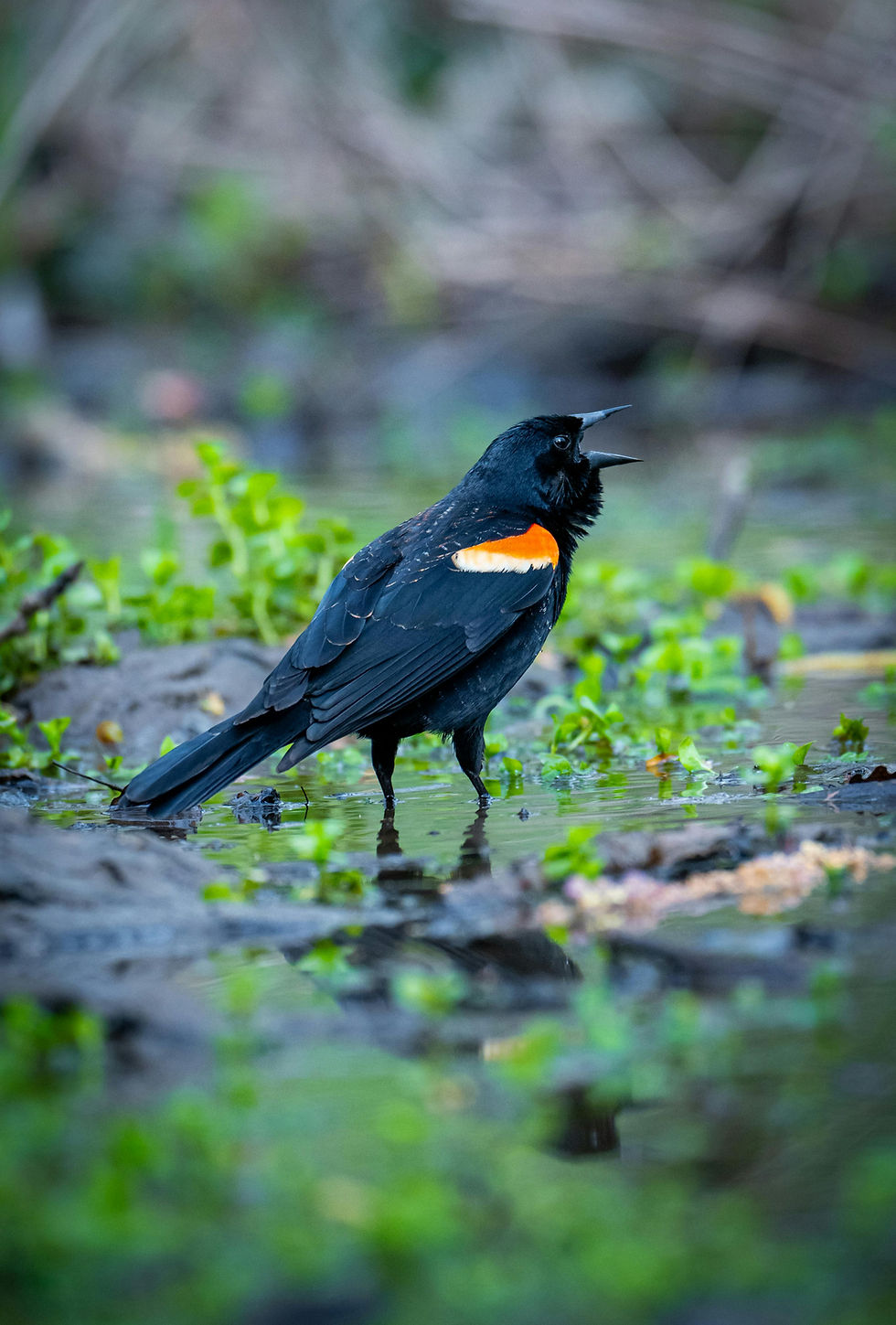
The Tordo Sargento (Agelaius phoeniceus), also known as the Red-winged Blackbird, is one of the most recognizable and widespread birds in the Americas. It is a medium-sized bird, roughly the size of a robin, that lives in open, wet environments. The male is easy to identify by its glossy black feathers and the bright red and yellow patches on its shoulders, which it can hide or show depending on its mood. The female looks very different, with a dark brown, streaked body that looks like a large sparrow, helping her stay hidden while nesting. In Costa Rica, these birds are often seen along the edges of lagoons and in marshy fields, where they act as loud and active guardians of their territory.
Top Locations & Tour Suggestions for Tordo Sargento Spotting
These birds love wet, open spaces and avoid thick forests. You can find them in many lowland areas of Costa Rica.
Kayaking in Punta Uva: While they prefer freshwater, they can often be found in the wet, grassy areas behind the beach or along the canal that flows toward the sea.
Caño Negro Wildlife Refuge: The vast wetlands here are perfect for spotting these birds. You can join a Boat Safari to see them perched on tall reeds or floating vegetation near the water's edge
Palo Verde National Park: The seasonal marshes and floodplains here attract large numbers of Tordo Sargentos. A guided river tour is the best way to see them as they forage in the grass and shrubs.
Frequently Asked Questions about Tordo Sargentos in Costa Rica
Why do they have red shoulder patches?
The red patches, or epaulets, are used for communication. Males puff them out and sing to show other birds that they own a territory. They also show them to attract females. If they want to stay hidden from a predator, they can tuck the red feathers under their black wing feathers.
Are they dangerous at all?
They are not dangerous to people, but they are very brave and aggressive. During nesting season, a male will chase away much larger animals, including hawks, horses, and even humans, if they get too close to the nest.
What do they eat?
Their diet changes with the seasons. In the summer, they eat many insects like beetles, caterpillars, and grasshoppers. During other times of the year, they mainly eat seeds from grasses and weeds, and they will also eat small berries.
Do they live in groups?
Outside of the nesting season, they are very social. They often gather in huge flocks with thousands of other blackbirds to sleep and look for food in open fields.
What is the best time of day to see them?
They are active all day, but they are most visible in the early morning and late afternoon when they are singing from high perches or moving to their communal sleeping spots.
Social Status: The Busy Community Member
The social life of the Tordo Sargento is very active. During the nesting season, they live in flexible groups. Because good nesting spots in thick reeds are hard to find, many birds will live close together in the same marsh. During the rest of the year, they become highly social and travel in massive flocks to find food and stay safe from predators.
Finding a Mate: A Show of Strength and Song
To find a mate, the male finds a high spot, like a tall reed or a fence post, and sings loudly. He will spread his tail, puff his feathers, and show off his bright red shoulders to attract females. This species is polygamous, meaning one male can have many mates, sometimes up to 15 females will nest within a single male's territory.
Birth: Life on the Reeds
The female builds a cup-shaped nest using grass, reeds, and mud. She usually lays 3 or 4 eggs that are light blue or green with dark spots. The eggs hatch after about 10 to 12 days. The mother does most of the work to keep the eggs warm, but both parents help feed the babies once they are born.

Parenting: Fast Training for the Young
The babies grow very quickly. They stay in the nest for only 11 to 14 days before they are ready to leave. During this time, the parents are constantly bringing them insects to help them grow. Even after leaving the nest, the young birds will stay close to the parents for a few weeks to learn how to find food on their own.
Habitat: The Open Water and Grassy Fields
Tordo Sargentos need wet, open areas to survive. They are most common in freshwater marshes, rice fields, and wet pastures. They avoid thick forests and busy cities, preferring the edges of lagoons and slow-moving rivers where they can find thick vegetation to hide their nests.

Daily Life: Foraging and Guarding
A typical day for these birds is spent searching for food and defending their home. They spend much of their time walking on the ground to find seeds or hopping through low shrubs to catch insects. Males spend about a quarter of their day singing and chasing away intruders to make sure their territory stays safe.
Behavior: The Brave Defender
These birds are famous for their bravery. They use a "conk-la-ree" song that can be heard from far away. When they fly, they have an undulating or "wavy" movement. Their most notable behavior is their willingness to attack anything that comes near their nest, no matter how big the intruder is.
Ecological Role: The Marsh Regulator
Tordo Sargentos help keep the environment healthy by eating large numbers of insects. This helps prevent insect populations from getting too high and damaging plants. They also serve as an important food source for larger predators like hawks and owls. By moving between different habitats, they help spread the seeds of wetland plants.
Predators: Danger from the Sky and Water
Because they live in open areas, they must always be on the lookout for danger. Large birds of prey, like falcons and hawks, are their main enemies in the sky. In the water, snakes and large fish may try to eat the babies or eggs in the nest. Their best defense is living in large groups and having the males act as lookouts.
Interesting Facts about the Tordo Sargento
They are one of the most abundant birds in North and Central America, with millions of individuals in the wild.
Different groups of these birds can vary in size based on where they live, though they all look very similar.
They are considered very intelligent and can learn to find food in new environments quickly.
Their nests are so strong that they have been found to contain over 100 separate pieces of plant material.
Young males have smaller, more orange shoulder patches than the adults.
Culture and History: The Farmer's Neighbor
In many places, the Tordo Sargento is well-known to farmers because they often feed in agricultural fields. While they can sometimes be seen as a pest for crops like corn, they are also respected for eating harmful insects.

The Science of the "Wavy" Flight
Tordo Sargentos have a specific way of flying where they flap their wings quickly and then take a short pause. This creates a bouncy, up-and-down movement through the air. This style of flight helps them save energy when they are traveling across large open fields or moving between different parts of a marsh.
Communication: Songs and Visual Signs
These birds use both sound and sight to talk. They have several different calls for warning others about predators or claiming a spot to sleep. Their visual signs, like showing their red shoulders or spreading their tail, are just as important as their songs for keeping the group organized and safe.
Conservation: Protecting the Wetlands
In Costa Rica, the Tordo Sargento is currently not in danger, but they depend on healthy wetlands to survive. Habitat loss from building and farming can take away their nesting spots. Protecting the lagoons and riverbanks is the best way to make sure these colorful birds continue to thrive in the wild.
Tips for Travelers and Photographers
The best way to find them is to listen for their loud, clear singing coming from the reeds.
They often sit on top of fence posts or low bushes near the water.
While they prefer marsh vegetation, they occasionally nest in tall trees or young trees near water sources.
To get a great photo of a male, wait for him to puff out his feathers and show the bright red patches on his wings.
If a bird starts diving toward you or screaming loudly, you are likely too close to a nest and should move away to give them space.


Comments