
The Jesus Lizard
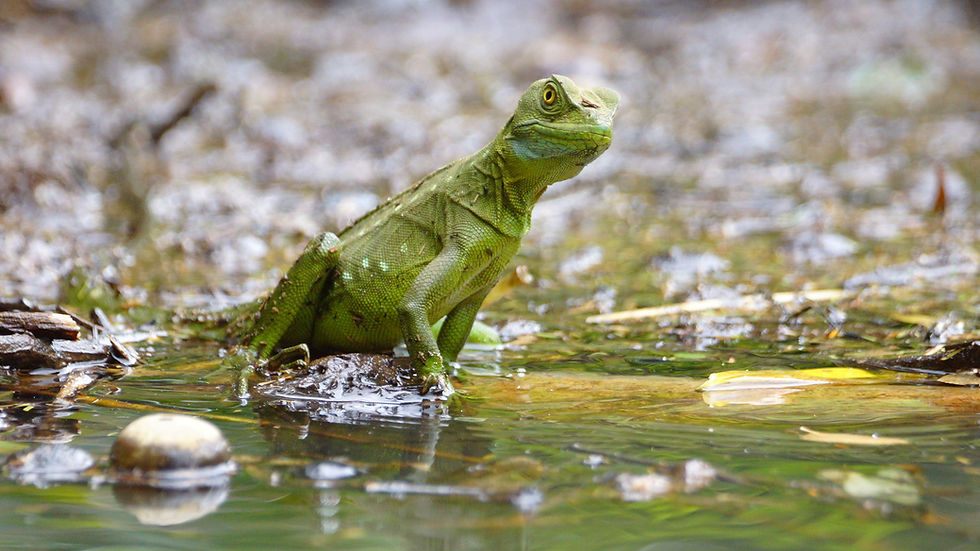
Meet the Jesus Lizard of Costa Rica:
The Incredible Surface-Runner of the Riverbanks
The Jesus Lizard is one of the most entertaining and remarkable reptiles you'll see along the rivers and streams of Costa Rica. Known formally as the Green Basilisk (Basiliscus plumifrons) or the Brown Basilisk, its famous nickname comes from a seemingly impossible skill. It can actually run across the surface of the water without sinking. This lizard is easy to recognize because of the magnificent sail-like crests on its head, back, and tail, which make it look like a tiny, prehistoric dragon. It's a bold and active creature that loves to bask in the sun on low-hanging branches over the water. For anyone exploring the waterways of Costa Rica, watching a Basilisk sprint across a river is a truly unforgettable sight.
Where to See Jesus Lizards in Costa Rica
These lizards are very common and live near freshwater sources like rivers, lakes, and marshes throughout the lowlands.
Top 3 Best Places to See Jesus Lizards in Costa Rica
Tortuguero National Park: This is the ultimate spot. As you boat through the narrow canals, you'll see dozens of them perched on branches right at eye level.
Manuel Antonio National Park: You can often find them near the small streams and mangroves that wind through the park toward the beach.
Caño Negro Wildlife Refuge: The slow-moving rivers here are perfect habitats for large Basilisks. It’s a great place to see them in action.
Frequently Asked Questions about Jesus Lizards in Costa Rica
How do they run on water?
It's all about physics and speed! They've got specialized fringes on their long toes that unfurl to create a larger surface area. By slapping their feet hard against the water, they create tiny pockets of air that keep them from sinking. As long as they keep up their high speed, they stay on top!
Are they dangerous to humans?
Not at all. They're very shy and'll usually dive into the water or run away as soon as they feel you're too close. They've got small teeth for eating insects, but they aren't aggressive and pose no threat to people.
How big do they get?
Adults can grow quite large. Including their long tail, they can reach about 2 to 2.5 feet in length. The Green Basilisk is usually the most striking, with a brilliant emerald color and bright yellow eyes.
What is the best time of day to see them?
They're most active during the day. You'll often find them "sunbathing" in the mid-morning or early afternoon. They do this to warm up their bodies so they've got the energy to hunt and run.
What do Jesus Lizards eat?
They're omnivores, but they mostly eat insects like grasshoppers and beetles. They'll also eat small fish, freshwater shrimp, and even some fruits or flowers that fall into the water.

Social Status: The Master of the Perch
The social life of a Jesus Lizard revolves around territory and the best sunning spots. The males are very territorial and'll defend a prime perch over the water from other males. They use their impressive crests and head-bobbing displays to show off their strength. A dominant male'll often have a territory that includes several females. They're very observant neighbors and'll spend hours perfectly still, watching for both food and rivals.
Finding a Mate: The Head-Bobbing Dance
When a male wants to attract a partner, he uses a series of visual signals. He'll perform rapid head-bobs and expand his throat to show off his vibrant colors. If a female's impressed, she'll allow him to approach. These displays are a vital part of their social language, helping them communicate their health and status without always needing to fight.
Birth: Hidden in the Sand
Life starts in a small nest buried in the soft, moist soil near the riverbank. The female'll dig a hole and lay about 5 to 15 eggs. She carefully covers them up and leaves them to hatch on their own. The eggs rely on the warmth of the Costa Rican sun to incubate. After about 8 to 10 weeks, the tiny lizards hatch and're ready to take on the world immediately.
Parenting: Born Independent
There's no parenting in the world of the Basilisk. As soon as the babies hatch, they're completely on their own. They're born as miniature versions of the adults and already know how to hunt and, most importantly, how to run on water. This independence is necessary because the forest floor and riverbanks are full of predators that'd love to snack on a small lizard.

Habitat: The Waterfront Specialists
In Costa Rica, Jesus Lizards are true waterfront specialists. They're rarely found far from a permanent source of water. They love trees and bushes that overhang rivers because it provides them with a quick escape route. If a predator attacks from the land, they simply drop into the water and run or swim away. They're equally comfortable on both the Pacific and Caribbean slopes of the country.
Daily Life: Basking and Blending
The day for a Basilisk is a mix of high-speed action and total stillness. They spend a lot of time basking to regulate their body temperature. Because they're green or brown, they blend in perfectly with the leaves and bark. They can stay motionless for so long that you might not even notice one until it suddenly sprints across the water with a loud splashing sound.
Behavior: The Great Escape
The water-running behavior is their primary defense mechanism. When startled, they'll drop from their branch and sprint on their hind legs across the surface. They can travel at about 5 feet per second this way! Once they lose their momentum or feel they've reached safety, they'll sink into the water and swim the rest of the way, often staying submerged for several minutes to hide.
Ecological Role: The River's Insect Hunter
Jesus Lizards are important for keeping the insect populations near rivers in check. By eating a wide variety of bugs, they help maintain the balance of the local ecosystem. They're also a food source for larger predators like herons, hawks, and snakes. They're a key link in the food chain that connects the land and the water.
Predators: Staying Alert for Shadows
Life's dangerous when you live in the open. Basilisks have to watch the sky for large raptors and the water for crocodiles or large fish. Even snakes will try to sneak up on them while they're sleeping. Their excellent vision and "third eye" on top of their head help them detect shadows and movement from above, giving them a head start to make their famous escape.
Fun Facts about Jesus Lizards
They can stay underwater for up to 30 minutes if they're hiding from a predator!
The special scales on their feet only roll out when they hit the water; otherwise, they stay folded so the lizard can walk normally on land.
The Green Basilisk is often called the "Emerald Basilisk" because its color is so vibrant it looks like a gemstone.
Cultural Importance in Costa Rica
The Jesus Lizard is a favorite among Tico tour guides and travelers. It’s a symbol of the surprising and "magical" things you can see in the Costa Rican jungle. For many people, seeing a lizard "walk on water" is a moment that feels like a scene from a nature documentary, and it's a great example of the incredible adaptations found in our wildlife.
Tips for Travelers and Photographers
You'll get much closer to these lizards from a boat or kayak than you will on foot.
They're very fast. If you want a photo of them running, you'll need to use a very fast shutter speed and keep your camera ready.
Often, you'll hear them before you see them. If you hear a sudden slap-slap-slap on the water, look toward the sound to catch their high-speed exit!


Comments